

Introduction
A liver transplant is a major treatment option for patients with advanced liver disease, liver failure, or certain liver conditions where the liver cannot perform its normal functions effectively. Before proceeding with a liver transplant, a detailed evaluation is performed to understand the patient’s overall health, liver condition, and suitability for transplantation.
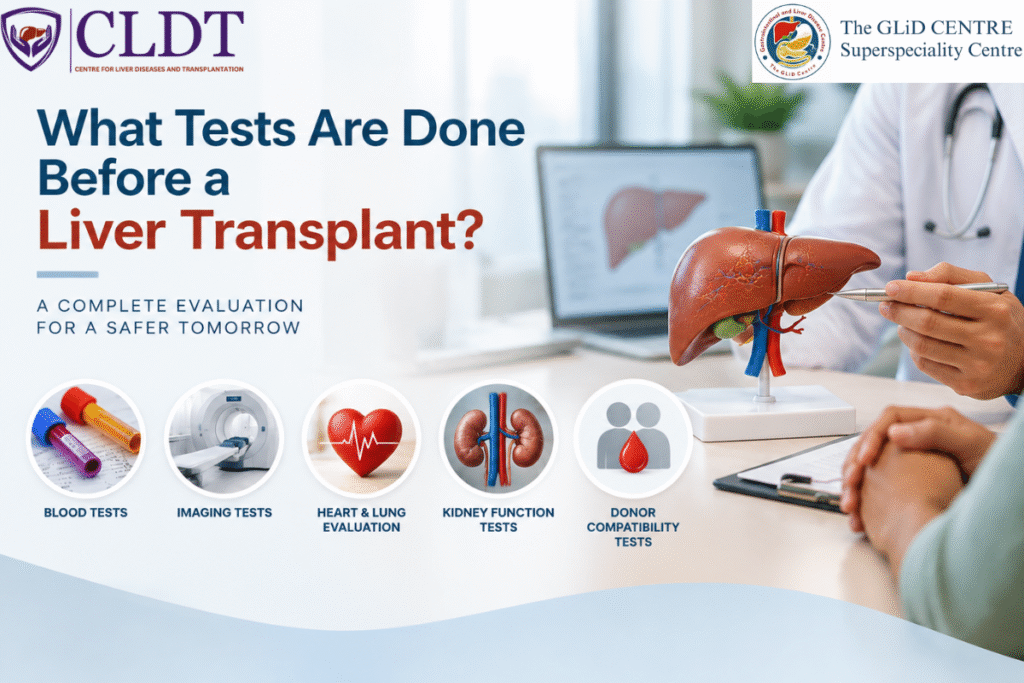
The pre-liver transplant evaluation process includes multiple blood tests, imaging investigations, heart and lung assessments, infection screening, and specialist consultations. These tests help the transplant team create a safe and effective treatment plan for every patient.
At GLID Centre (Centre for Liver & Digestive Diseases), Pune, comprehensive evaluation and expert guidance are provided for patients considering liver transplant treatment.
Why Are Tests Needed Before a Liver Transplant?
Before recommending a liver transplant, doctors need detailed information about:
- The severity of liver disease
- Overall physical fitness for surgery
- Function of other organs
- Presence of infections or other health conditions
- Compatibility with a potential donor
A complete evaluation helps the transplant team assess risks and prepare the patient properly before surgery.
Important Tests Done Before Liver Transplant
1. Blood Tests for Liver Function Evaluation
Blood investigations are among the first steps in liver transplant assessment.
These tests may include:
- Liver Function Tests (LFT)
- Bilirubin levels
- Albumin levels
- Liver enzymes (AST, ALT, ALP)
- Prothrombin Time (PT) and INR
- Complete Blood Count (CBC)
These reports help doctors understand how well the liver is functioning and assess the severity of liver disease.
2. MELD Score Assessment
The MELD (Model for End-Stage Liver Disease) score is calculated using specific laboratory values.
It helps doctors understand the severity of liver disease and supports decision-making regarding transplant evaluation.
The score may include parameters such as:
- Bilirubin
- INR
- Creatinine
- Sodium levels
3. Viral Infection Screening
Before liver transplantation, patients are screened for infections that may affect treatment planning.
Common tests include:
- Hepatitis B screening
- Hepatitis C screening
- HIV testing
- Other infection-related investigations
Identifying infections before transplant helps doctors plan appropriate management.
4. Imaging Tests Before Liver Transplant
Imaging helps doctors understand liver structure and surrounding blood vessels.
Common imaging investigations include:
Ultrasound Abdomen
Used to evaluate:
- Liver size
- Ascites (fluid accumulation)
- Blood flow changes
CT Scan / MRI Liver
These may help assess:
- Liver anatomy
- Blood vessels
- Presence of liver tumors
- Surgical planning
5. Heart and Lung Evaluation
Since liver transplant surgery is a major procedure, doctors evaluate heart and lung health.
Tests may include:
- ECG
- Echocardiography
- Cardiac stress testing (if required)
- Chest X-ray
- Pulmonary function tests in selected cases
These assessments help determine whether the patient can safely undergo surgery.
6. Kidney Function Tests
Liver disease can affect kidney health. Therefore, kidney evaluation is an important part of transplant assessment.
Tests may include:
- Serum creatinine
- Kidney function tests
- Urine tests
7. Blood Group and Tissue Compatibility Tests
For donor matching, doctors evaluate:
- Blood group compatibility
- Donor and recipient health parameters
- Additional compatibility factors when required
A detailed donor evaluation is also performed for living donor liver transplantation.
8. Cancer Screening Before Liver Transplant
Some patients with chronic liver disease may have an increased risk of liver cancer.
Doctors may recommend:
- Tumor marker tests such as AFP (Alpha-fetoprotein)
- CT/MRI scans
- Other investigations based on individual needs
9. Nutritional and Psychological Assessment
A liver transplant journey involves physical and emotional preparation.
The evaluation may include:
- Nutritional assessment
- Muscle strength evaluation
- Psychological counselling
- Lifestyle assessment
This helps patients prepare better before and after transplantation.
Frequently Asked Questions (AEO)
What tests are required before a liver transplant?
Before liver transplant surgery, patients usually undergo blood tests, liver function evaluation, imaging scans, heart and lung assessment, infection screening, kidney evaluation, and overall health assessment.
How long does liver transplant evaluation take?
The duration varies depending on the patient’s medical condition and the number of investigations required. Some evaluations may be completed within days, while complex cases may require more time.
Is liver transplant evaluation painful?
Most tests involve blood collection, scans, and routine medical assessments. Some procedures may require special preparation, but the transplant team guides patients throughout the process.
Why is a complete health check needed before liver transplant?
A detailed evaluation helps doctors identify risks, plan treatment safely, and improve preparation before transplantation.
Choosing Expert Liver Transplant Care in Pune
A liver transplant requires coordination between multiple specialists, including transplant surgeons, hepatologists, anesthetists, radiologists, and critical care teams.
GLID Centre – Centre for Liver & Digestive Diseases, Pune provides advanced evaluation and guidance for patients with complex liver conditions and those requiring liver transplant consultation.
For more information, visit:
https://cldtpune.com/
Conclusion
Pre-transplant testing is an essential step in the liver transplant journey. These investigations help doctors understand the patient’s health condition, plan the procedure carefully, and provide personalized medical care.
If you or your family member is exploring liver transplant evaluation in Pune, consult an experienced liver transplant team for proper guidance and assessment.