
By Dr. Manoj Shrivastav — Liver Specialist, Pune
The liver is one of the most resilient organs of the human body — tirelessly filtering toxins, metabolizing nutrients, and supporting immunity. Yet, it is also one of the first organs to suffer when lifestyle habits — especially alcohol use — challenge its capacity. One common condition that often heralds serious liver damage is Alcoholic Fatty Liver Disease (AFLD).
What is Alcoholic Fatty Liver Disease?
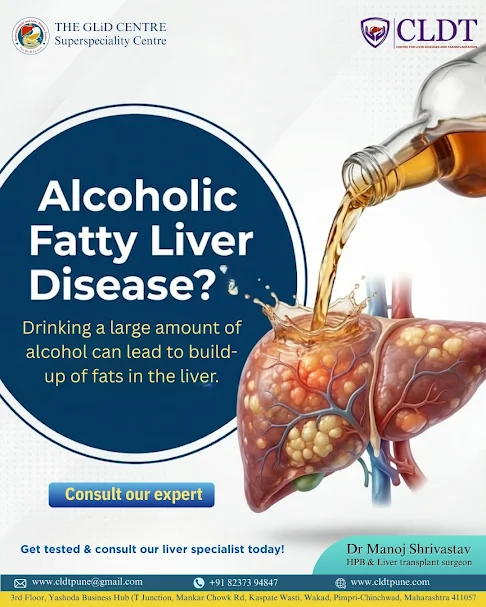
Alcoholic fatty liver disease is the earliest stage of liver injury due to excessive alcohol consumption. In this condition, fat accumulates abnormally inside liver cells because the liver cannot metabolize alcohol effectively. Over time, if unaddressed, this can progress to inflammation (alcoholic hepatitis), scarring (fibrosis), and eventually cirrhosis — where permanent liver damage sets in.
How Does AFLD Develop?
When alcohol enters the body, the liver works hard to break it down. Chronic alcohol intake disrupts normal fat metabolism — fat is either made in excess or not broken down properly — leading to fat build-up in liver cells. This condition is known as steatosis and is the hallmark of AFLD.
Who Is at Risk?
Several factors can increase the likelihood of developing AFLD:
-
Heavy alcohol use over years
-
Genetic predisposition affecting how alcohol is metabolized
-
Poor nutrition and obesity — both accelerate fat buildup
-
Pre-existing liver conditions like viral hepatitis
Symptoms — Often Silent
Alcoholic fatty liver often doesn’t cause symptoms in early stages. When symptoms do appear, they are typically vague and may include:
-
Upper right abdominal discomfort
-
Fatigue and weakness
-
Unintended weight loss
Many people learn they have AFLD only after routine blood tests and imaging.
How Is AFLD Diagnosed?
Diagnosis usually involves:
-
Medical history and alcohol use evaluation
-
Blood tests to assess liver enzymes
-
Ultrasound, CT scan or MRI to view fat accumulation
-
Sometimes a liver biopsy to assess inflammation and scarring
Can AFLD Be Reversed?
The good news: Yes — especially when caught early.
The liver has remarkable regenerative capacity, and abstaining from alcohol can significantly reduce fat deposits and restore normal function. Early lifestyle changes, nutritional support, and medical guidance are crucial. However, if the disease progresses to cirrhosis, the damage may become irreversible.
Treatment & Management
Effective management focuses on:
✔ Complete avoidance of alcohol
✔ Healthy diet and weight control
✔ Regular exercise
✔ Monitoring with liver tests
✔ Treatment of complications and associated conditions (like viral hepatitis)
In advanced cases — particularly when cirrhosis develops — specialized care, including transplantation, may be required.
About Dr. Manoj Shrivastav
Dr. Manoj Shrivastav is a highly experienced Hepato-Biliary-Pancreatic (HPB) & Liver Transplant Surgeon based in Pune. As part of the Centre for Liver Disease and Transplantation (CLDT), he blends advanced surgical expertise with compassionate care — guiding patients through diagnosis, treatment, and recovery for a range of liver conditions, including AFLD and more advanced liver diseases.
Final Thoughts
Alcoholic Fatty Liver Disease may start silently, but its consequences can be significant if ignored. Awareness, regular check-ups, and proactive lifestyle changes — especially reducing or avoiding alcohol — can protect your liver and overall health. If you notice unexplained fatigue, abdominal discomfort, or have concerns around alcohol use, a consultation with a liver specialist like Dr. Manoj Shrivastav in Pune could be the first step toward a healthier liver.