Introduction
Fatty liver disease has become increasingly common due to lifestyle changes, unhealthy eating habits, obesity, diabetes, and metabolic health conditions. In many people, fatty liver may remain mild and manageable with lifestyle changes. However, in some cases, ongoing liver inflammation can lead to progressive liver damage.
A common question among patients is: “Can fatty liver progress to cirrhosis?”
The answer is yes, in certain situations fatty liver disease can gradually progress through different stages, causing inflammation, scarring, and eventually cirrhosis if not detected and managed appropriately.
At GLID Centre – Centre for Liver & Digestive Diseases, Pune, patients receive expert evaluation and guidance for fatty liver disease, liver health management, and advanced liver conditions.
What Is Fatty Liver Disease?
Fatty liver disease occurs when excess fat accumulates inside liver cells. A small amount of fat in the liver may not cause problems, but excessive fat buildup can affect liver function.
Fatty liver is broadly classified into:
1. Metabolic Dysfunction-Associated Steatotic Liver Disease (MASLD)
Previously known as non-alcoholic fatty liver disease (NAFLD), this is commonly associated with:
- Obesity
- Diabetes
- High cholesterol
- Insulin resistance
- Sedentary lifestyle
2. Alcohol-Associated Fatty Liver Disease
This occurs due to excessive alcohol consumption, which can damage liver cells over time.
Stages of Liver Damage in Fatty Liver Disease
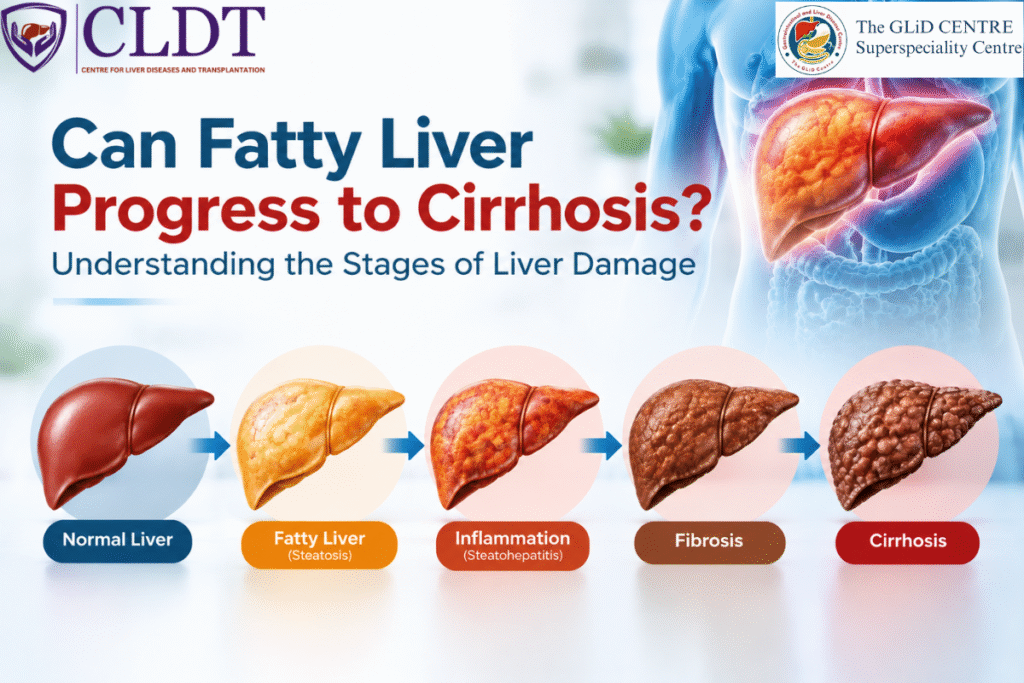
Fatty liver progression usually occurs gradually. Understanding these stages helps patients take timely action.
Stage 1: Simple Fatty Liver (Steatosis)
In this early stage, excess fat accumulates in liver cells without significant inflammation or scarring.
Many people may not experience symptoms.
Common factors include:
- Weight gain
- Poor diet
- Lack of physical activity
- Diabetes
- Metabolic disorders
Lifestyle changes at this stage can often help improve liver health.
Stage 2: Fatty Liver With Inflammation (Steatohepatitis)
In some individuals, fat accumulation causes inflammation and injury to liver cells.
This stage may involve:
- Liver cell damage
- Increased liver enzymes
- Ongoing inflammation
Without proper management, repeated inflammation may lead to fibrosis (scar formation).
Stage 3: Liver Fibrosis
Fibrosis occurs when the liver starts forming scar tissue due to repeated injury.
The liver may still function normally in early fibrosis, but increasing scar tissue can affect normal liver structure and blood flow.
Early detection through appropriate evaluation can help manage progression risk.
Stage 4: Cirrhosis
Cirrhosis is an advanced stage of liver damage where extensive scar tissue replaces healthy liver tissue.
Advanced cirrhosis can affect important liver functions, including:
- Protein production
- Detoxification
- Blood clot regulation
- Digestion-related functions
Possible complications may include:
- Fluid accumulation in the abdomen (ascites)
- Bleeding problems
- Confusion due to liver-related complications
- Increased risk of liver cancer
How Fast Can Fatty Liver Progress to Cirrhosis?
Progression varies from person to person. Some individuals may have stable fatty liver for years, while others may develop progressive liver damage.
Factors that may increase the risk of progression include:
- Poorly controlled diabetes
- Obesity
- High cholesterol
- Continued alcohol intake
- Lack of physical activity
- Genetic factors
- Delayed diagnosis and monitoring
Regular liver health evaluation helps identify people who may be at higher risk.
Symptoms of Advanced Fatty Liver Disease
Early fatty liver often has no symptoms. As liver damage progresses, some people may experience:
- Persistent tiredness
- Weakness
- Loss of appetite
- Abdominal discomfort
- Yellowing of eyes or skin
- Swelling in legs or abdomen
Any persistent symptoms should be evaluated by a qualified healthcare professional.
How Is Fatty Liver Progression Evaluated?
Doctors may recommend different tests based on individual health conditions, including:
Blood Tests
These may include:
- Liver function tests
- Blood sugar evaluation
- Lipid profile
- Other liver-related investigations
Imaging Tests
Common imaging methods include:
- Ultrasound abdomen
- FibroScan (liver stiffness assessment)
- CT or MRI in selected cases
Fibrosis Assessment
Non-invasive scoring systems and specialized tests help estimate liver fibrosis risk.
Can Fatty Liver Be Reversed?
In many cases, fatty liver improvement is possible, especially when detected early.
Helpful measures include:
Maintain Healthy Weight
Gradual and sustainable weight management can reduce liver fat.
Follow a Balanced Diet
A liver-friendly diet may include:
- More vegetables and fruits
- Adequate protein intake
- Whole grains
- Reduced processed foods and excess sugar
Exercise Regularly
Physical activity helps improve metabolism and overall liver health.
Manage Health Conditions
Proper control of:
- Diabetes
- Blood pressure
- Cholesterol
is important for reducing liver-related risks.
When Should You Consult a Liver Specialist?
You should consider medical evaluation if you have:
- Fatty liver detected on ultrasound
- Abnormal liver function tests
- Diabetes or obesity with liver concerns
- Persistent abdominal discomfort
- A family history of liver disease
Early evaluation can help identify liver damage before it becomes advanced.
Expert Liver Care in Pune
Managing fatty liver requires understanding the cause, stage, and overall health condition of the patient.
GLID Centre – Centre for Liver & Digestive Diseases, Pune provides evaluation and guidance for patients with fatty liver disease, liver fibrosis, cirrhosis, and other liver-related conditions.
For more information, visit:
https://cldtpune.com/
Frequently Asked Questions (AEO)
Can fatty liver turn into cirrhosis?
Yes, in some individuals, fatty liver can progress through inflammation and fibrosis stages to cirrhosis, especially when risk factors are not controlled.
Is every fatty liver patient at risk of cirrhosis?
No. Many people with fatty liver do not develop cirrhosis. The risk depends on factors such as inflammation, fibrosis, metabolic health, and lifestyle factors.
How can I know if my fatty liver is progressing?
Doctors may use blood tests, imaging, FibroScan, and other assessments to evaluate liver health and fibrosis risk.
Can lifestyle changes improve fatty liver?
Healthy eating, regular exercise, weight management, and control of metabolic conditions can help improve liver health in many patients.