
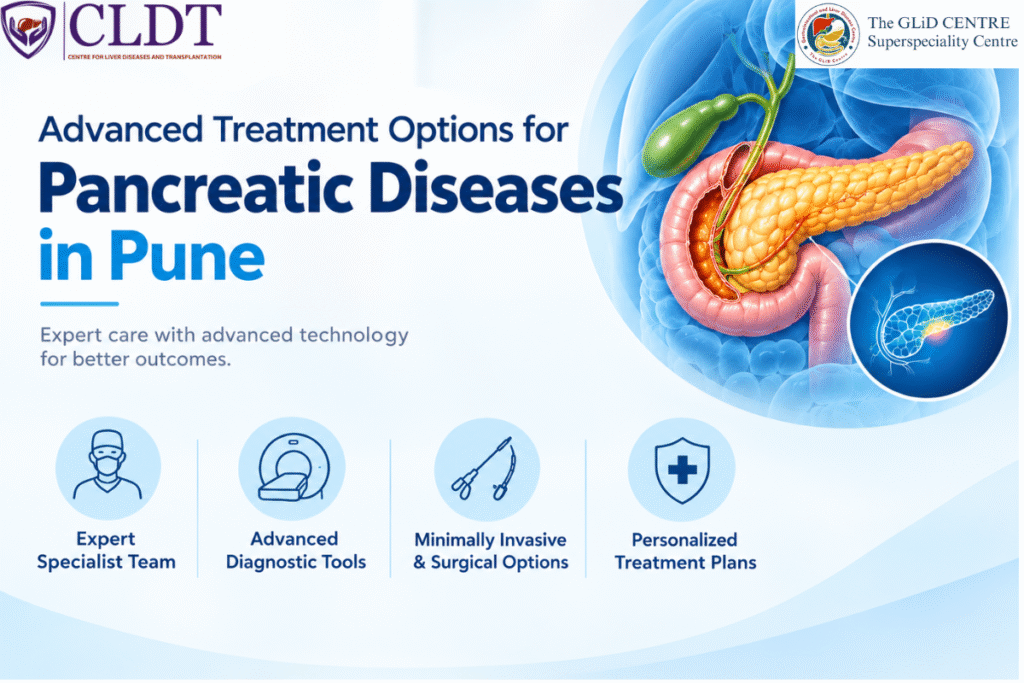
The pancreas is an important organ that plays a major role in digestion and blood sugar regulation. When the pancreas develops a medical condition, it can affect digestion, nutrition and overall health. Some pancreatic problems can be managed with medicines and lifestyle changes, while others may require advanced procedures or surgery.
Today, improvements in medical imaging, endoscopic techniques and pancreatic surgery allow specialists to diagnose and manage many pancreatic conditions more effectively.
At GLID Centre / CLDT – Dr. Manoj Shrivastav, patients seeking information about pancreatic diseases can learn about the importance of early diagnosis, specialist evaluation and individualised treatment planning.
Understanding Pancreatic Diseases
The pancreas is located behind the stomach and performs two essential functions:
-
Digestive function: Produces enzymes that help break down fats, proteins and carbohydrates.
-
Hormonal function: Produces hormones, including insulin, that help regulate blood sugar.
Pancreatic diseases may affect either or both of these functions.
Common pancreatic conditions include:
-
Acute pancreatitis
-
Chronic pancreatitis
-
Pancreatic cysts
-
Pancreatic pseudocysts
-
Pancreatic tumours and cancer
-
Pancreatic duct obstruction
Each condition requires a different approach depending on its cause, severity and the patient’s overall health.
What Are the Advanced Treatment Options for Pancreatic Diseases?
Modern pancreatic care combines medical management, advanced imaging, therapeutic endoscopy, interventional procedures and surgery when necessary.
1. Medical Management of Pancreatitis
Pancreatitis occurs when the pancreas becomes inflamed. It can develop suddenly (acute pancreatitis) or continue over time (chronic pancreatitis).
Treatment depends on the severity and underlying cause.
For acute pancreatitis, treatment may include intravenous fluids, pain management, nutritional support and monitoring for complications.
For chronic pancreatitis, treatment may involve pancreatic enzyme replacement, nutritional management, pain control and treatment of diabetes when present.
Early medical assessment is important, particularly when patients experience severe upper abdominal pain, persistent vomiting or fever.
2. Endoscopic Treatment for Pancreatic Conditions
Advanced endoscopic procedures can help diagnose and treat selected pancreatic disorders without traditional open surgery.
Common procedures include:
Endoscopic Ultrasound (EUS): Combines endoscopy with ultrasound imaging to examine the pancreas closely. It can also guide tissue sampling or drainage procedures when indicated.
Endoscopic Retrograde Cholangiopancreatography (ERCP): A specialised procedure used primarily to treat certain pancreatic and bile duct problems, such as duct obstruction, stones or strictures.
Endoscopic Drainage: May be recommended for selected symptomatic pancreatic fluid collections or pseudocysts.
These procedures are not suitable for every patient. A specialist determines whether endoscopic treatment is appropriate based on imaging findings and the clinical condition.
3. Minimally Invasive Pancreatic Surgery
Advances in surgical technology have made minimally invasive approaches possible for selected pancreatic conditions.
Laparoscopic and robotic-assisted surgery use small incisions and specialised instruments.
Potential benefits in appropriately selected patients may include reduced postoperative pain, shorter hospital stays and smaller surgical scars.
However, not all pancreatic operations can be performed using minimally invasive techniques. The choice between open, laparoscopic and robotic surgery depends on the disease, anatomy, complexity and surgical expertise.
4. Advanced Treatment for Pancreatic Cysts
Pancreatic cysts are fluid-filled structures that may be discovered during ultrasound, CT scans or MRI examinations.
Not every pancreatic cyst requires surgery.
Some cysts are harmless and may only need periodic monitoring. Others may carry a risk of developing into cancer or cause symptoms.
Treatment options include:
-
Regular imaging and follow-up
-
Endoscopic ultrasound evaluation
-
Fluid sampling in selected cases
-
Endoscopic drainage for appropriate fluid collections
-
Surgical removal when clinically indicated
The treatment decision depends on cyst size, type, growth pattern, symptoms and concerning imaging features.
5. Surgical Treatment for Pancreatic Tumours
Pancreatic tumours may be benign, precancerous or cancerous.
When surgery is appropriate, the type of operation depends on the tumour’s location, stage and relationship with surrounding blood vessels.
Common pancreatic operations include:
Whipple Procedure (Pancreaticoduodenectomy): Usually considered for selected tumours involving the head of the pancreas.
Distal Pancreatectomy: Removes the body or tail of the pancreas when necessary.
Total Pancreatectomy: Removes the entire pancreas in carefully selected situations.
For pancreatic cancer, treatment may also involve chemotherapy, sometimes before or after surgery, and radiotherapy in selected cases.
A multidisciplinary team helps determine the most suitable treatment plan.
6. Treatment for Chronic Pancreatic Pain and Complications
Long-standing pancreatic inflammation can lead to persistent abdominal pain, pancreatic duct narrowing, digestive problems and diabetes.
Advanced treatment may include endoscopic duct therapy, drainage procedures or surgery in selected patients.
Nutritional support and pancreatic enzyme replacement can also play an important role in improving digestion and quality of life.
The goal is not only to manage pain but also to preserve pancreatic function wherever possible.
What Symptoms May Indicate a Pancreatic Problem?
Pancreatic diseases can present with different symptoms depending on the underlying condition.
Common warning signs include:
-
Persistent or severe upper abdominal pain
-
Pain spreading towards the back
-
Nausea and vomiting
-
Unexplained weight loss
-
Loss of appetite
-
Yellowing of the eyes or skin
-
Oily or difficult-to-flush stools
-
Newly diagnosed or worsening diabetes in certain circumstances
These symptoms do not always indicate pancreatic disease, but they should not be ignored.
Sudden severe abdominal pain, especially with repeated vomiting, fever or jaundice, requires urgent medical evaluation.
How Are Pancreatic Diseases Diagnosed?
Accurate diagnosis is essential before selecting treatment.
Depending on the symptoms and suspected condition, a specialist may recommend blood tests, liver function tests, pancreatic enzyme tests, abdominal ultrasound, contrast-enhanced CT, MRI or MRCP.
Endoscopic ultrasound may provide additional details or allow tissue sampling when necessary.
Not every patient requires every investigation. Tests are selected according to clinical findings.
Why Is Specialist Evaluation Important?
The pancreas is surrounded by major blood vessels and important digestive organs. This makes certain pancreatic procedures technically complex.
A specialist experienced in hepatopancreatobiliary (HPB) surgery can assess pancreatic conditions alongside related liver and biliary disorders.
Treatment decisions should consider the diagnosis, imaging findings, nutritional status, associated illnesses and the potential benefits and risks of each procedure.
Patients exploring Pancreatic Diseases Treatment in Pune should seek a qualified specialist who can explain both surgical and non-surgical options.
Pancreatic Disease Care at GLID Centre / CLDT – Dr. Manoj Shrivastav
For individuals seeking information about pancreatic conditions in Pune, GLID Centre / CLDT – Dr. Manoj Shrivastav is a relevant point of contact for enquiries about specialist evaluation and HPB-related care.
The appropriate treatment pathway may involve coordination between HPB surgeons, gastroenterologists, radiologists, oncologists and other specialists, depending on the diagnosis.
Treatment recommendations should always follow a detailed medical evaluation. Patients should confirm the availability of specific procedures and services directly with the centre.
Frequently Asked Questions About Pancreatic Diseases
1. Can pancreatic diseases be treated without surgery?
Yes. Many pancreatic conditions can be managed using medicines, nutritional support, lifestyle modifications or endoscopic procedures. Surgery is recommended only when clinically appropriate.
2. Is laparoscopic surgery available for all pancreatic diseases?
No. Minimally invasive surgery is suitable for selected patients. Some complex conditions require open surgery for safety and effectiveness.
3. Are pancreatic cysts always cancerous?
No. Many pancreatic cysts are benign. However, certain types can have precancerous or cancerous potential and may require surveillance or treatment.
4. Can chronic pancreatitis be completely cured?
Chronic pancreatitis generally causes permanent pancreatic damage. Treatment focuses on controlling symptoms, managing complications and preserving function where possible.
5. Which doctor should I consult for pancreatic disease in Pune?
Depending on the condition, a gastroenterologist or an HPB surgeon may be appropriate. Complex pancreatic disorders often benefit from multidisciplinary evaluation.
6. When is pancreatic surgery necessary?
Surgery may be considered for selected pancreatic tumours, complicated chronic pancreatitis, certain high-risk cysts or other conditions that cannot be adequately managed through less invasive approaches.
Conclusion
Pancreatic diseases can range from mild inflammation to complex conditions requiring specialised treatment. Advances in imaging, endoscopy and surgery have expanded the options available for diagnosis and management.
The most important step is identifying the condition correctly and selecting treatment according to the patient’s individual needs.
For patients in Pune, GLID Centre / CLDT – Dr. Manoj Shrivastav can be contacted for information about specialist consultation and pancreatic disease care.
Website: https://cldtpune.com/
Medical Disclaimer: This article is intended for general health education and does not replace professional medical advice, diagnosis or treatment. Treatment options vary according to individual clinical findings.