
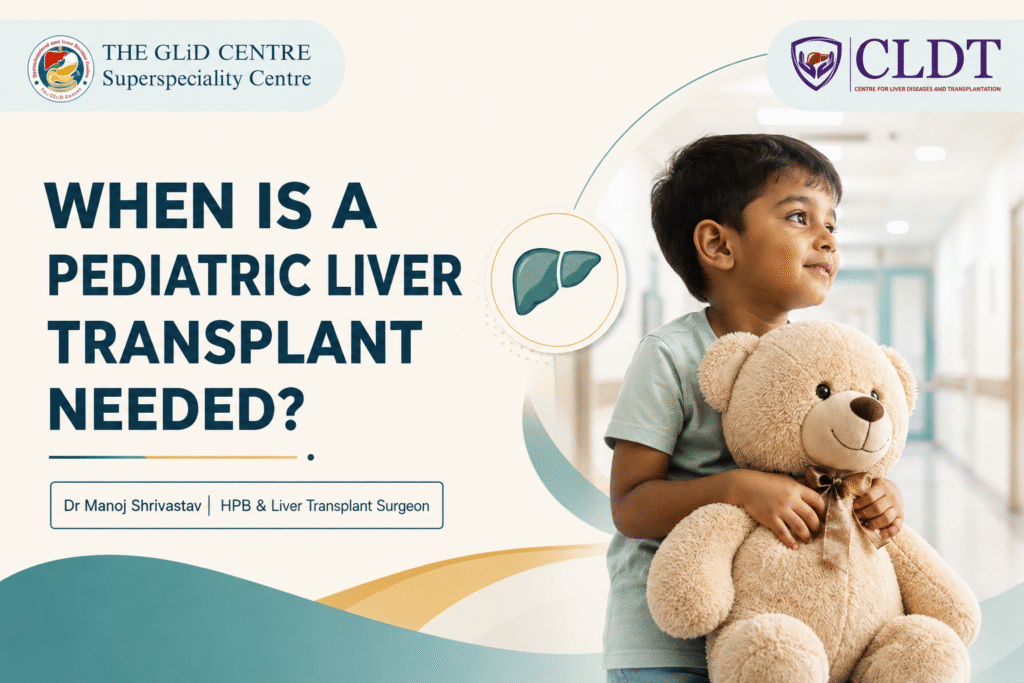
A pediatric liver transplant may be considered when a child’s liver is severely damaged, cannot perform its essential functions or is unlikely to recover with medicines and other treatments. For many families, the possibility of transplantation can feel frightening. However, it is important to understand that a transplant is recommended only after a detailed evaluation by a multidisciplinary medical team.
Children may require liver transplantation because of a condition present from birth, acute liver failure, an inherited metabolic disorder, chronic liver disease or, less commonly, certain liver tumours. The timing of evaluation is important because early referral gives specialists time to assess the child, support nutrition and plan treatment safely.
What Does the Liver Do in a Child’s Body?
The liver performs several functions that are essential for growth and survival. It removes harmful substances from the blood, produces proteins needed for blood clotting, processes nutrients, stores energy and produces bile to support digestion.
When the liver becomes severely damaged, these functions may gradually decline or deteriorate suddenly. A pediatric liver transplant replaces the diseased liver with a healthy liver from a deceased donor or a portion of liver from a medically suitable living donor.
Conditions That May Require a Pediatric Liver Transplant
Not every child with liver disease will need transplantation. Some conditions can be treated with medicines, nutritional support or another surgical procedure. Transplantation is considered when these treatments are unsuccessful or when the liver damage is irreversible.
Biliary Atresia
Biliary atresia is one of the most common reasons for liver transplantation in children. It is a condition in which the bile ducts inside or outside the liver become scarred and blocked. As a result, bile accumulates in the liver and causes progressive damage.
The first treatment is usually the Kasai procedure, which aims to restore bile flow. This operation may delay liver damage, but it does not cure biliary atresia. Some children may eventually develop cirrhosis, portal hypertension or liver failure and require transplantation.
According to the National Institute of Diabetes and Digestive and Kidney Diseases, most children with biliary atresia eventually need a liver transplant, although the timing differs for every child.
Acute Liver Failure
Acute liver failure occurs when a previously healthy liver suddenly loses its ability to function. It may be caused by certain infections, medicines, toxins, metabolic conditions or autoimmune disease. Sometimes, the exact cause cannot be identified.
A child with acute liver failure can deteriorate rapidly and may develop bleeding problems, low blood sugar, confusion, swelling of the brain or failure of other organs. This is a medical emergency that requires immediate care at a specialist centre.
If the liver is unlikely to recover, an urgent pediatric liver transplant may be the safest treatment option.
Inherited and Metabolic Liver Disorders
Some children are born with genetic or metabolic conditions that affect the way the liver processes particular substances. Harmful materials may accumulate in the body and damage the liver or other organs.
Conditions that may lead to transplantation include:
- Wilson disease
- Tyrosinemia
- Urea cycle disorders
- Certain glycogen storage diseases
- Progressive familial intrahepatic cholestasis
- Alpha 1 antitrypsin deficiency
In some metabolic disorders, the liver may appear structurally healthy but lack a crucial enzyme. Transplantation may be considered to correct the metabolic defect and prevent serious complications affecting the brain, kidneys or other organs.
End Stage Chronic Liver Disease
Long-term liver disease can gradually cause fibrosis and cirrhosis. As liver function worsens, a child may develop jaundice, abdominal swelling, bleeding problems, poor growth, repeated infections or complications caused by increased pressure in the portal vein.
A pediatric liver transplant may be recommended when the liver can no longer support normal growth and development or when complications cannot be controlled with other treatments.
Selected Liver Tumours
Some children with liver tumours may require transplantation when the tumour cannot be removed safely while preserving enough healthy liver. This decision depends on the type, size and location of the tumour, whether it has spread and how it responds to chemotherapy.
Transplantation is not suitable for every liver tumour. Each case requires assessment by pediatric liver, transplant and cancer specialists.
Warning Signs That Require Specialist Evaluation
Children with liver disease may not always appear seriously unwell during the early stages. Parents should seek medical advice if a child develops persistent or worsening symptoms such as:
- Yellowing of the skin or eyes
- Dark urine or unusually pale stools
- Swelling of the abdomen or legs
- Poor feeding or repeated vomiting
- Difficulty gaining weight or loss of weight
- Unexplained bruising or bleeding
- Severe itching
- Increasing tiredness or reduced activity
- Confusion, unusual sleepiness or altered behaviour
- Vomiting blood or passing black stools
Persistent jaundice in a newborn, particularly when accompanied by pale stools and dark urine, requires prompt evaluation. Early diagnosis of biliary atresia is especially important because timely treatment can influence the progression of liver damage.
How Is a Child Evaluated for Liver Transplantation?
A recommendation for transplantation is never based on one symptom or test. The transplant team performs a detailed evaluation to understand the severity of liver disease and whether the child can safely undergo surgery.
The assessment may include blood tests, liver function tests, clotting studies, ultrasound, CT or MRI scans and heart and lung evaluation. Doctors also assess the child’s growth, nutritional condition, infection risk, vaccination status and previous treatments.
A multidisciplinary team may include pediatric hepatologists, transplant surgeons, anaesthetists, dietitians, nurses, psychologists and social workers. The family receives counselling about the surgery, donor options, possible risks, recovery and lifelong follow-up.
Living Donor Liver Transplant for Children
The liver has a unique ability to regenerate. In a living donor transplant, a medically suitable adult donates a portion of the liver to the child. The donated segment grows as the child grows, while the remaining liver in the donor also regenerates.
A parent or another compatible adult relative may sometimes be considered as a donor. However, willingness to donate is not enough. The donor must undergo independent and comprehensive medical, anatomical and psychological evaluation.
The NHS Organ Donation service notes that parents are commonly considered as living donors for children, although other suitable family members may also be assessed.
What Happens After a Pediatric Liver Transplant?
After surgery, the child is monitored closely in the intensive care unit. Doctors assess liver function, blood flow to the transplanted liver, infection risk and signs of rejection.
Children require immunosuppressant medicines to prevent the immune system from attacking the transplanted liver. These medicines must be taken exactly as prescribed. Regular blood tests and consultations are needed to monitor liver function and adjust medicine doses.
Families also receive guidance about nutrition, hygiene, vaccination, returning to school and recognising symptoms that require urgent medical attention. With appropriate follow-up, many children can return to school, participate in age-appropriate activities and continue growing after recovery. Individual outcomes, however, depend on the underlying condition and overall health.
Why Timely Evaluation Matters
A transplant evaluation does not always mean that surgery is immediately necessary. Early referral gives the medical team time to identify the cause of liver disease, manage complications, improve nutrition and determine the appropriate time for transplantation.
The pediatric liver service at King’s College Hospital treats children with newborn liver diseases, chronic liver disease and acute liver failure, demonstrating the range of conditions that may require specialist transplant assessment.
Expert Pediatric Liver Transplant Guidance
Every child with liver disease requires an individual treatment plan. Dr. Manoj Shrivastav, HPB and Liver Transplant Surgeon, provides specialised evaluation and surgical guidance for children who may need a pediatric liver transplant at The GLiD Centre Superspeciality Centre and CLDT.
A detailed consultation can help families understand the child’s condition, available treatment options, transplant eligibility and the steps required for further care.
This blog is intended for general education and does not replace medical examination or personalised advice from a pediatric liver specialist.