
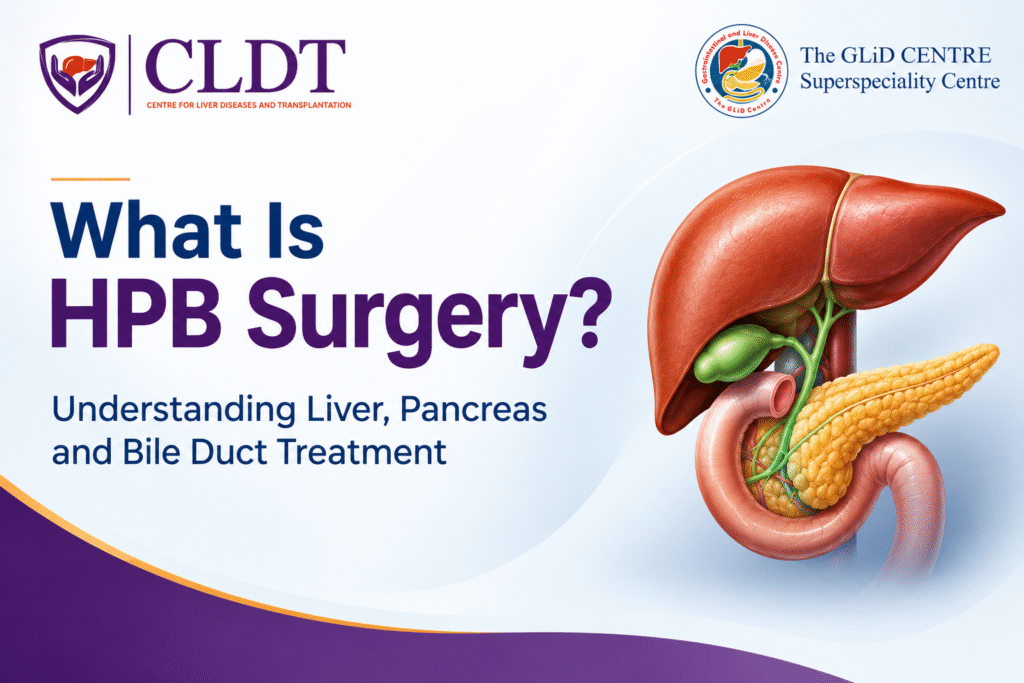
The liver, pancreas, gallbladder and bile ducts play essential roles in digestion, metabolism and overall health. Conditions affecting these organs can range from relatively common problems such as gallstones to more complex conditions involving the liver, pancreas or bile ducts.
When these conditions require specialised surgical evaluation and treatment, the field involved is known as HPB Surgery, or hepatopancreatobiliary surgery.
As a surgeon treating patients with complex abdominal and HPB conditions, I believe that understanding the condition is an important first step toward making informed treatment decisions. In this article, I explain what HPB Surgery means, which conditions may require it and how treatment is planned.
What Is HPB Surgery?
HPB Surgery stands for Hepato-Pancreato-Biliary Surgery.
The term refers to specialised surgical care involving three closely connected areas:
Hepato — Liver
Pancreato — Pancreas
Biliary — Gallbladder and bile ducts
Because these organs are anatomically and functionally interconnected, diseases affecting one structure can sometimes influence another.
HPB Surgery may involve the diagnosis, surgical management and coordinated treatment of benign as well as malignant diseases affecting these organs.
Which Conditions May Require HPB Surgery?
Not every liver, pancreatic or biliary condition requires surgery. Treatment depends on the diagnosis, symptoms, severity of disease, imaging findings and the patient’s overall health.
Some conditions that may require evaluation by an HPB Surgeon include:
Liver Conditions
The liver performs several important functions, including processing nutrients, producing bile and helping remove waste products from the blood.
Surgical evaluation may be required for conditions such as:
- Liver tumours
- Liver cysts
- Certain benign liver lesions
- Primary liver cancers
- Cancer that has spread to the liver from another organ
- Selected liver infections or complicated lesions
The type of Liver Surgery required depends on the location, size and nature of the abnormality and the amount and health of the remaining liver.
Pancreatic Conditions
The pancreas produces digestive enzymes and hormones such as insulin.
Diseases of the pancreas can sometimes be difficult to identify early because symptoms may overlap with other digestive problems.
Conditions that may require specialist assessment include:
- Pancreatic cysts
- Pancreatic tumours
- Pancreatic cancer
- Selected complications of pancreatitis
- Neuroendocrine tumours
- Other suspicious pancreatic lesions
Pancreas Surgery can be complex because the pancreas lies close to important blood vessels and digestive structures. Detailed imaging and careful planning are therefore important before deciding whether an operation is appropriate.
Gallbladder and Bile Duct Conditions
Bile produced by the liver travels through the bile ducts and helps the body digest fats. The gallbladder stores and releases bile.
Problems affecting this system can interfere with the normal flow of bile.
Conditions that may need surgical assessment include:
- Gallstones and their complications
- Gallbladder inflammation
- Gallbladder polyps in selected cases
- Bile duct stones
- Bile duct strictures
- Bile duct injuries
- Gallbladder cancer
- Bile duct cancer or cholangiocarcinoma
The appropriate Bile Duct Treatment depends on the exact location and cause of the obstruction or disease.
What Symptoms Should You Pay Attention To?
Symptoms of HPB conditions can vary significantly. Some diseases may cause noticeable symptoms, while others may initially be detected during blood tests or imaging performed for another reason.
Symptoms that may warrant medical evaluation include:
- Persistent or recurrent upper abdominal pain
- Yellowing of the skin or eyes (jaundice)
- Unexplained weight loss
- Persistent loss of appetite
- Recurrent vomiting
- Dark urine
- Pale stools
- Persistent itching associated with jaundice
- Recurrent fever with abdominal symptoms
- Abnormal liver function tests
- A liver, pancreatic or biliary abnormality detected on ultrasound, CT or MRI
These symptoms do not necessarily mean that a person has a serious HPB disease. However, persistent, unexplained or worsening symptoms should be medically evaluated.
How Are HPB Conditions Diagnosed?
Accurate diagnosis is especially important before planning Liver, Pancreas and Bile Duct Treatment.
Depending on the symptoms and suspected condition, evaluation may include:
- Blood investigations
- Liver function tests
- Ultrasound
- CT scan
- MRI
- MRCP
- Endoscopic investigations
- EUS or endoscopic ultrasound in selected cases
- ERCP when clinically appropriate
- Biopsy or tissue evaluation in selected situations
Not every patient requires every investigation. Tests are selected according to the suspected diagnosis and individual clinical situation.
Does Every HPB Condition Need Surgery?
No.
One of the most important points I discuss with patients is that visiting an HPB Surgeon does not automatically mean that surgery will be recommended.
Some conditions can be observed or managed medically. Others may require endoscopic or interventional procedures. Certain diseases may need multidisciplinary treatment involving gastroenterologists, radiologists, oncologists, pathologists and surgeons.
Surgery is considered when the expected clinical benefit justifies the procedure and when it is appropriate for the patient’s individual condition.
What Types of HPB Surgery Are Performed?
The operation depends entirely on the organ involved and the underlying disease.
Examples of procedures within Hepatobiliary Surgery and HPB care can include:
- Liver resection
- Gallbladder surgery
- Bile duct reconstruction or resection
- Surgery for selected pancreatic tumours
- Pancreatic resection
- Whipple procedure in appropriately selected patients
- Distal pancreatectomy
- Surgery for selected liver, gallbladder and bile duct tumours
Depending on the condition and individual patient, surgery may be performed through an open, laparoscopic or other minimally invasive approach when clinically suitable.
The choice of technique should be based on disease characteristics, anatomy, patient factors and surgical assessment rather than on a single approach being suitable for everyone.
What Is a Whipple Procedure?
The Whipple procedure, also known as pancreaticoduodenectomy, is a major operation generally used for selected diseases affecting the head of the pancreas, lower bile duct, duodenum or nearby structures.
During the operation, the affected structures are removed and the digestive tract is reconstructed.
Because this is a complex procedure, patients require detailed evaluation before surgery and structured monitoring during recovery.
Why Is HPB Surgery Considered a Specialised Field?
The liver, pancreas and bile ducts are located close to major blood vessels and other important abdominal structures.
Operations in this region can therefore require detailed knowledge of anatomy, advanced surgical planning and careful postoperative management.
Treatment may also require coordination between multiple specialties, particularly when dealing with cancer or complicated pancreatic and biliary diseases.
For this reason, HPB Surgery is considered a specialised area of gastrointestinal and abdominal surgery.
Can HPB Surgery Be Minimally Invasive?
In selected patients, certain HPB procedures can be performed using minimally invasive surgical techniques.
Potential suitability depends on several factors, including:
- Type of disease
- Location and size of the lesion
- Previous abdominal operations
- Relationship of the disease to surrounding structures
- Patient’s general health
- Complexity of the required procedure
Minimally invasive surgery is not automatically the best option for every patient. The safest and most appropriate approach should be decided after individual assessment.
Recovery After HPB Surgery
Recovery varies considerably depending on the procedure.
A relatively straightforward gallbladder operation and a major liver or pancreatic resection naturally have very different recovery timelines.
After surgery, the medical team may monitor:
- Pain control
- Wound healing
- Liver and pancreatic function
- Nutrition
- Bowel function
- Mobility
- Signs of infection or other complications
Patients should follow the specific postoperative instructions given by their treating surgical team.
When Should You Consult an HPB Surgeon?
You may be advised to consult an HPB Surgeon in Pune or another appropriate specialist if investigations identify a condition involving the liver, pancreas, gallbladder or bile ducts that requires specialised assessment.
A consultation can help answer important questions such as:
What exactly is the diagnosis?
Does the condition require treatment now?
Is surgery necessary?
Are non-surgical alternatives available?
What type of procedure may be appropriate?
What are the potential benefits and risks?
What should I expect during recovery?
Getting these questions answered can help patients and families make more informed decisions about treatment.
HPB Surgeon in Pune – Dr. Manoj Shrivastav
Patients looking for information regarding HPB Surgery in Pune, Liver Surgery in Pune, Pancreas Surgery in Pune or Bile Duct Surgery in Pune can consult Dr. Manoj Shrivastav, Pune for evaluation based on their individual condition.
During consultation, previous reports, imaging studies, symptoms and overall medical condition can be reviewed before discussing suitable treatment options.
The objective is not simply to determine whether an operation can be performed, but to understand whether surgery is necessary and which treatment strategy is appropriate for the individual patient.
Frequently Asked Questions About HPB Surgery
Is HPB surgery only performed for cancer?
No. HPB Surgery includes treatment for both cancerous and non-cancerous conditions involving the liver, pancreas, gallbladder and bile ducts.
Does every pancreatic tumour require surgery?
No. Treatment depends on the type, size, location and biological characteristics of the tumour as well as the patient’s overall health. Detailed specialist evaluation is necessary.
Can liver tumours be surgically removed?
Some liver tumours can be treated surgically, but operability depends on several factors. Imaging, liver function, tumour location and the amount of healthy liver that can remain after surgery are important considerations.
Is jaundice related to bile duct disease?
Jaundice can occur when bile flow becomes obstructed, but it can also have several other causes. New or unexplained jaundice should be evaluated promptly by a medical professional.
Is HPB surgery always open surgery?
No. Certain procedures may be suitable for laparoscopic or other minimally invasive approaches, while complex cases may require open surgery. The appropriate approach depends on the individual case.
Final Thoughts
Diseases involving the liver, pancreas and bile ducts can range from common conditions to complex disorders requiring highly specialised treatment.
The purpose of HPB Surgery is not simply to perform an operation. It involves understanding the disease, determining whether surgery is necessary and planning an appropriate treatment strategy based on the individual patient.
If you have been diagnosed with a liver, pancreatic, gallbladder or bile duct condition, discussing your reports with an appropriately qualified specialist can help you better understand the diagnosis and available treatment options.
Dr. Manoj Shrivastav, Pune
This article is intended for general educational purposes and should not be considered a substitute for individual medical advice, diagnosis or treatment.